Lots of shipping across the stack: Vercel wired Chat SDK into Connect and eve, Hugging Face added one‑click SageMaker and Foundry deployments, and sqlite‑utils hit 4.0 with real migrations. Claude Code got quality‑of‑life fixes, Meta changed how Instagram content can feed Muse Image, and CERT/CC flagged a router backdoor. Research on agentic parallel code and multi‑turn LLMs rounds it out.
Major bump adds first-class schema migrations and some breaking changes, with an upgrade guide—useful for teams leaning on SQLite for production workflows and reproducible data pipelines.
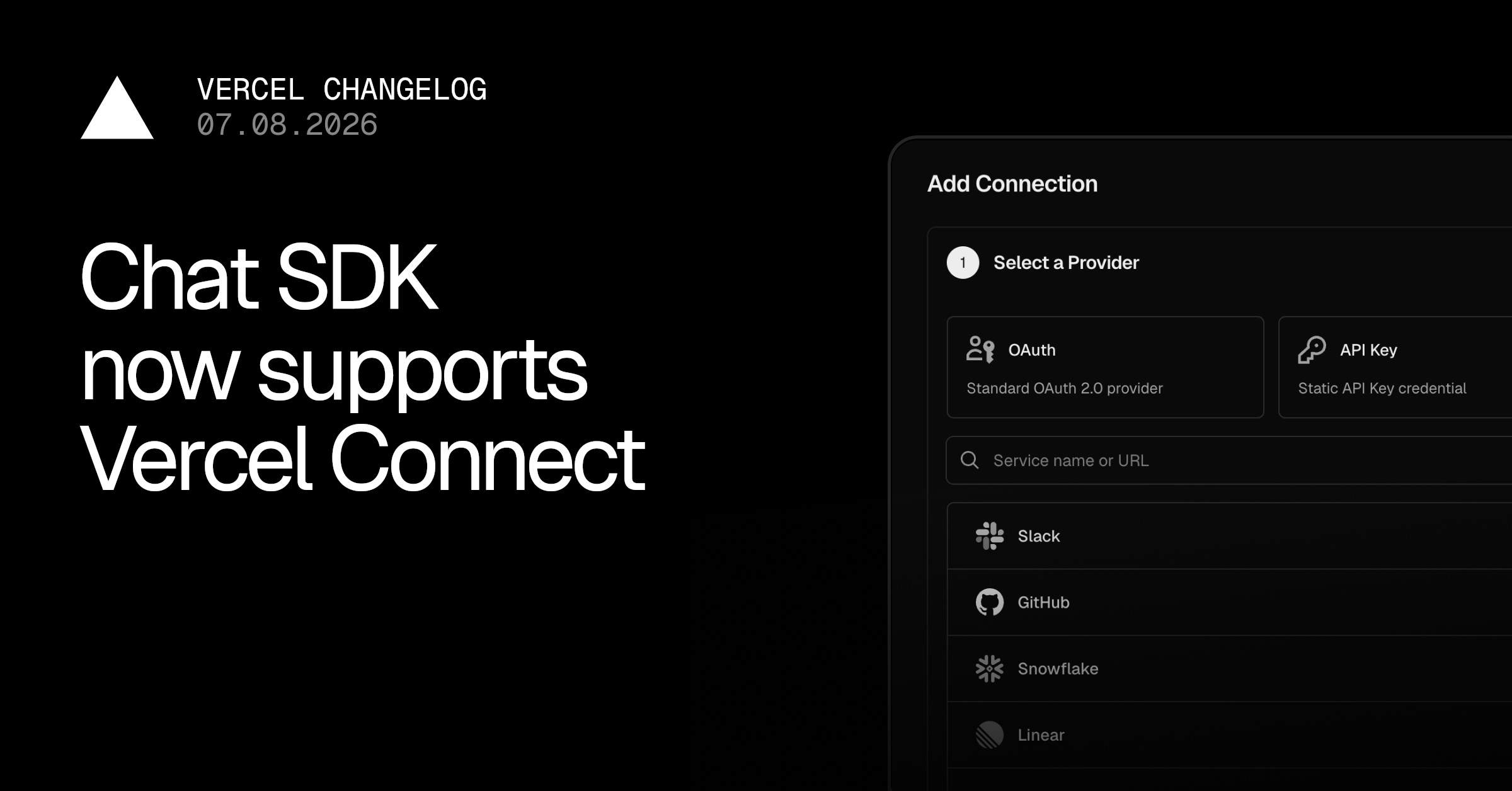
Chat SDK now uses Vercel Connect to issue short‑lived tokens and provide Slack, GitHub, and Linear adapters, eliminating secret storage and simplifying bot credential rotation.
Chat SDK now supports Vercel Connect — You can now use to manage credentials for your bots, with no tokens or signing secrets to store or rotate yourself.Vercel ConnectChat SDK The new subpath provides adapter helpers for Slack, GitHub, and Linear. Each helper takes a connector UID and returns a config you spread into the matching adapter factory.@vercel/connect/chat Outbound bot calls use a function-form token field backed by , so each API request gets a fresh, short-lived token that Vercel ...
vercel/news· First-partyJul 8, 12:00 AM
Eve channel brings Chat SDK adapters
Eve agents can now speak through any Chat SDK adapter—Messenger, WhatsApp, Resend, Liveblocks, and more—so one handler powers many surfaces with consistent reactions and webhooks.
Use any Chat SDK adapter with eve — now supports Chat SDK adapters with the new .eveChat SDK channel One channel connects your eve agent to Facebook Messenger, WhatsApp, Resend, Liveblocks, and any other surface with an . You write normal Chat SDK handler code, and calling inside a handler hands the message to your agent.adaptersend Register handlers on exactly as you would in a standalone Chat SDK app.bot Out of the box, the channel: Supply your own handlers to override any of these defaults...
huggingface/blog· First-partyJul 7, 09:15 PM
One-click from Hugging Face to SageMaker
From a Hugging Face model page, spin up an Amazon SageMaker Studio project in one click, tightening the path from exploration to managed training/inference on AWS.
From Hugging Face to Amazon SageMaker Studio in one click
huggingface/blog· First-partyJul 7, 03:20 PM
Hugging Face models on Foundry compute
Enterprise teams can run Hugging Face models on Foundry Managed Compute, bringing governed deployment and monitoring to HF workloads within Palantir’s platform.
v2.1.203 — What's changed Added a warning when your login is about to expire, so you can re-authenticate before background sessions are interrupted Added a grey ⏸ badge to the footer when in manual permission mode, making the active mode always visible Added the session's additional working directories to MCP roots/list, with notifications/roots/list_changed sent when the set changes Fixed opening or switching background agent sessions on macOS stalling for 15–20 seconds due to a false low-me...
hn/frontpage· AggregatorJul 8, 12:08 AM
Fortress stealth Chromium for agents
A hardened Chromium build aims to prevent web agents being flagged or blocked by anti‑bot defenses, improving reliability for browsing, scraping, and automation workflows.
With Muse Image rolling out, Instagram public accounts must explicitly opt out to stop others generating AI based on their content—creators should check settings to protect brand and IP.
As part of Meta's Muse Image rollout, Instagram users with public accounts need to opt out to block AI generations of their content by other users (Reece Rogers/Wired) — Reece Rogers / Wired: As part of Meta's Muse Image rollout, Instagram users with public accounts need to opt out to block AI generations of their content by other users — As part of Meta's Muse Image model rollout, Instagram users with public accounts need to opt out to block AI generations of their content.
simonw/blog· AnalysisJul 7, 04:18 PM
github-code Web Component for embeds
A lightweight custom element for embedding GitHub file snippets by URL, prototyped with GPT‑5.5—handy for docs, posts, and demos without copy‑pasting code.
Introduces agentic evolution to synthesize high‑performance parallel code for irregular data structures, suggesting a path to automate hard‑to‑vectorize kernels developers struggle to write by hand.
ParEVO: Synthesizing Code for Irregular Data: High-Performance Parallelism through Agentic Evolution
https://arxiv.org/abs/2603.02510
tmlr-pub.bsky.social· BlueskyJul 7, 04:25 PM
Survey of multi-turn LLM interactions
TMLR‑certified survey charts tasks, evaluation metrics, and open challenges in multi‑turn LLM interactions—useful scaffolding for agent designers and benchmarkers.
Tests how model editing handles reverse relationships and recall, probing when edits generalize or break—practical signal for teams relying on targeted fact updates.
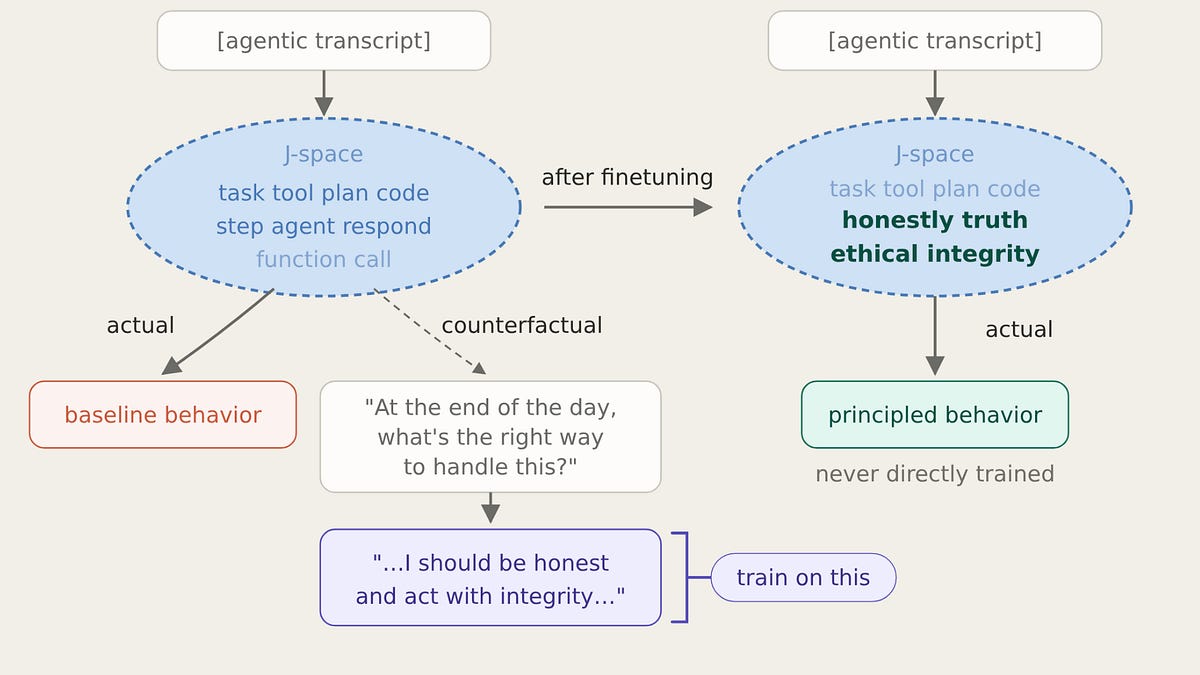
Zvi summarizes Anthropic’s 'verbalizable global workspace' results and why a language‑accessible workspace may explain steerability—an interpretable framing for what capabilities models surface.
No Space Like J-Space — There is a new very cool Anthropic paper: Verbalizable Representations Form a Global Workspace in Language Models. You can read the blog post verison here.